
Flame
Flammable Materials: Catches fire spontaneously if exposed to air, water, sparks, flame, or friction (e.g. sodium). Keep material away from flames.

Flame Over Circle
Oxidizing Materials: Fire or explosion risk in the presence of flammable or combustible material (e.g. hydrogen peroxide, fluorine, chlorine, bleach). Store in liquid.

Gas Cylinder
Gases Under Pressure: May explode if heated, punctured, or dropped (e.g. aerosol cans, fire extinguishers, helium for balloons). Keep away from heat.

Explosion
Highly Reactice Materials: Risk of explosion due to fire, shock, friction, heat or puncture (e.g. sodium, organic peroxides). Use extreme caution and follow handling instructions.
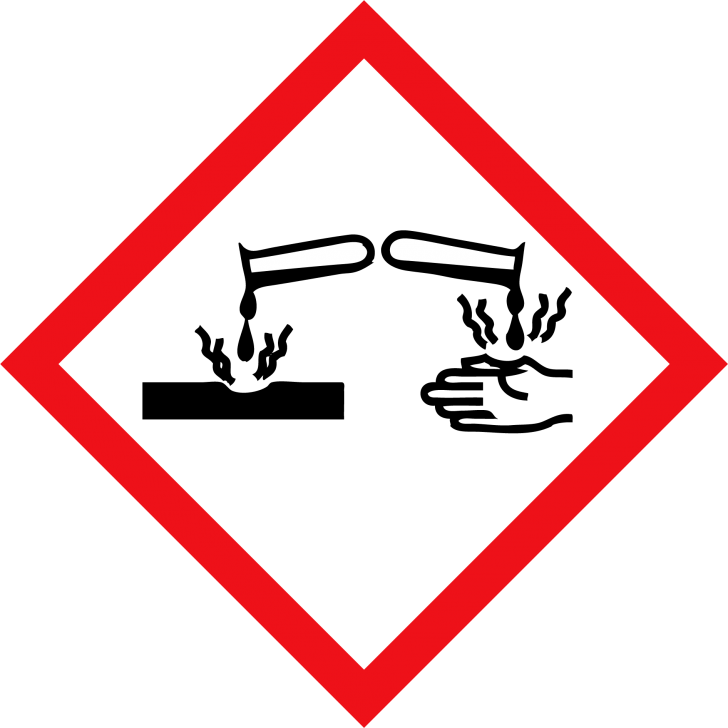
Corrosion
Corrosive Materials: Causes severe skin burns or eye damage (e.g. sulfuric acid). Wear protective clothing.

Health Hazard
Cause serious health effects: allergic reactions, cancer, birth defects, damaged organs, harm fertility or unborn children (e.g. ethidium bromide). Avoid prolonged exposure, wear protective equipment.

Skull & Crossbones
Acute Toxicity: Cause death or toxicity with short exposure to even small amounts if inhaled, swallowed or contacted through skin (e.g. carbon monoxide, cyanide). Use extreme caution.

Exclamation Mark
Harmful Materials: Cause less serious health effects (e.g. carbon tetrafluoride, asbestos). Can be fatal in large quantities. May cause damage the ozone layer.
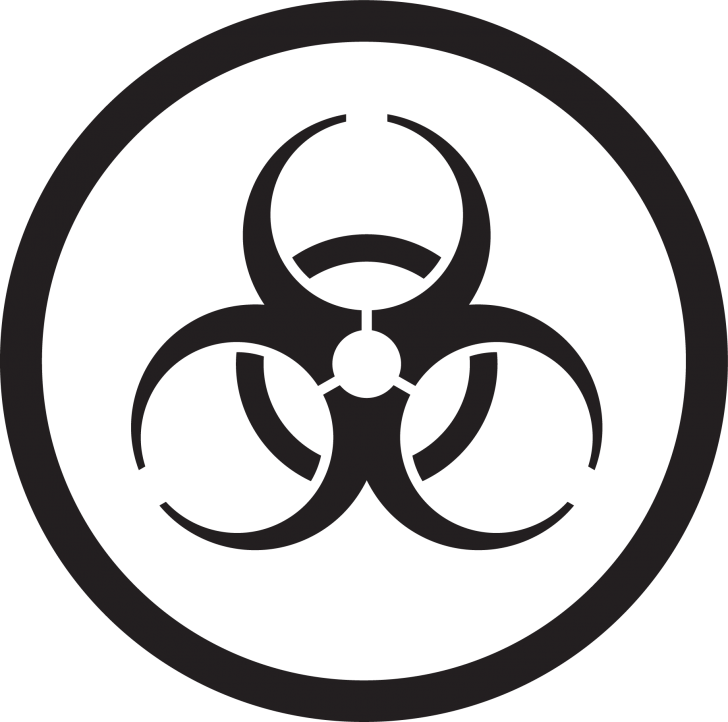
Biohazard
Organisms or toxins that cause diseases in people or animals resulting in illness or death (e.g. bacteria. nuclear waste). Handle with caution and follow instructions carefully.